
Psychology Categorizes...
... but what good is that?

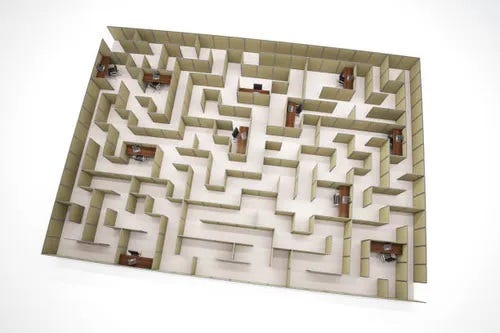
No matter where the rat goes, there is no cheese. Is it getting cheesed off?
Psychologists have made trillions of attempts to grasp the reality of constant change in two-dimensional models that can be applied to categorize personal perception, preferences, initiatives, and reactions. As a result, they often resort to developing professional-sounding typologies, that is categories for their subjects and for human functioning. It only adds insults to injury that it has no set of values in a single interpretive frame, so the mind-boggled who acquire a degree in Psychology can pick and choose their “values” as well as set up “diagnoses” as they please without the slightest risk of losing face or, for that matter, their licenses. Needless to say, their original confusion might increase, when they are able and willing to face facts, or get lost in the mazes of their “professionalism.” Either way, they are not in an enviable position, especially because their efficiency proven in causing intentional harm or taking advantage of their targets, and much less demonstrated in helping anyone, including themselves.
The whole picture tends to be disillusioning, as it happens so often, when the perpetual change is frozen into the frame of a moment. Typologies are developed with personality types and fixes. “Treatments” in in one of the latest fads, Cognitive Psychology, turned out little more than reconditioning method that eclectically utilized previous and concurrent “goodies” from treatments. With its heydays around 2001 gone, is old enough by now to demonstrate that, while people can be reconditioned, the change cannot supersede primary conditioning, so it always remains temporary, unless the “training” remains uninterrupted. Of course, that follows the madical premise of “a patient cured is a customer lost,” but what if the conditioning is “successful”? Without a feasible paradigm for the human being, who knows or even dares to know what can gift the patient full access to living a productive and valuable life?
The confusion between abilities and “personality traits” is far too common; abilities can be used for good and bad alike, and occasionally, they are genetic, which is obvious among specific groups (families, micro-cultures, tribes, and races) of the population. “Personality traits,” however, as far as I can relate to them, are manipulative nonsense most of the time, as I described it a couple of articles ago (but I also referred to flexible and dynamic models that sound, and have proven, a bit more realistic):
Psychology is at its worst, when it develops “personality types.” The Myers-Briggs seems to be popular:
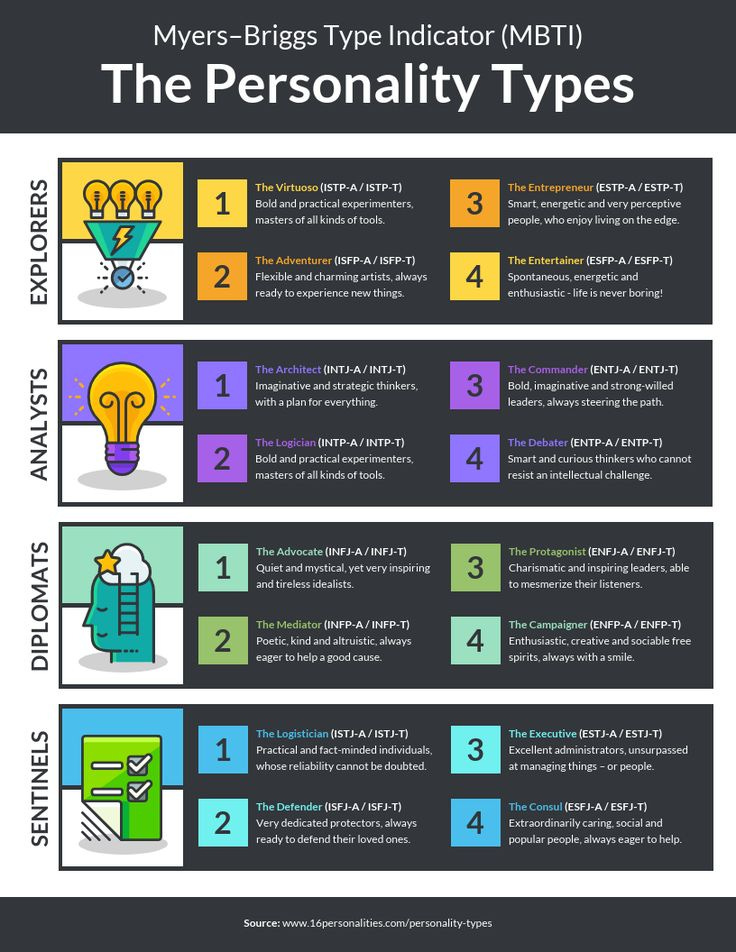
I hate typologies, because they masquerade as platforms of expertise, while they only provide frameworks for lazy problem-solvers. Notice that no matter how fancy the “types” are, they are all meant to appeal to you, no matter which of them you agree to be, which resembles coffeehouse astrologists, at best. Let me make it a bit more obvious:
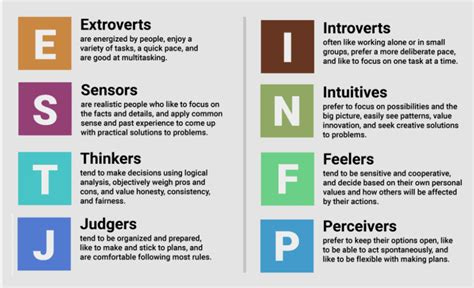
The very absurdity of the categories insults my intelligence or at least whatever is left of it at my age. These are normal human activities and they are used as needed, so their dominance mostly depends on which of these the person’s environment calls for in problem-solving situations, so the more common a type of problem is, the more likely “you” are going to be a “type.”
Can it be done any better?
A typology can become more convincing, if it mimics the reality of constant change, but such typologies don’t exactly abound among “professionals.”1
As far as I know, there is no evidence of the existence of the DNA they way it’s dished out to the unwashed peasant. Chances are, an AI no commoner has ever seen has already decoded the human genome, and the publicized image of the DNA is only around to cover it up.2 No matter how I twist it, even in the fake model, there is no single gene for an ability; it’s ALWAYS a combination of genes. Additionally, constant mutation (natural or not, and it’s a question when it passes for adaptation and becomes mutation) is omnipresent, so those combinations can and do change from time to time, and one can logically assume that there are even contextual and individual differences, making generalizations and categorization shaky at best. The globalist solution is to wipe the slate of the mind clean and replace individual thinking with a hive mind, a sheer monstrosity and the hotbed for schizophrenia (my current article quotes some of it and updates it).
In my article, https://rayhorvaththesource.substack.com/p/interchangeable-roles-of-victims, I bring up transactional theory and the Enneagram as exceptions.
Here is something for the future, which is already the present in Western Australia:
https://www.nraila.org/articles/20250324/just-one-more-step-australia-s-new-weapon-laws
Quote from the article:
WA becomes the first Australian jurisdiction to require specific, recurring mental health checks as part of the licensing of gun owners. These include a self-assessment form that the applicant or licensee completes and takes to their medical provider. The doctor is to review the self-assessment form and conduct a medical assessment of the applicant/licensee, with the results reported to police (meets or does not meet the firearm authority health standards, or meets with conditions). New license applicants must undergo the examination as part of the application process; existing licensees will be subject to health examinations incrementally over a five-year transitional period. Licensees aged 80 or over will be required to undergo annual exams.
Perfect Ray! Notice, there is no Myers-Briggs category for "Critical Thinking". Is that because that can't be tested or because that's a no-no? I think the latter. There should also be a category for ”money making at the expense of others". Now Drs Myers and Briggs themselves would fit perfectly with that.
👉Your post complements this post: https://protonmagic.substack.com/p/how-to-isolate-a-personality-disorder