
Culinary Colonization

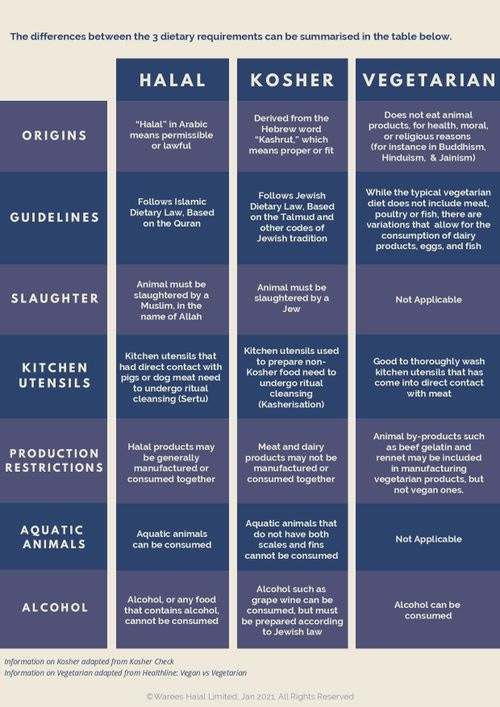
This is only the beginning. One cannot help noticing that the Muslim source considers the differences of the same importance as the ones between vegetarians and non-vegetarians.
The modern forces don’t need armies to develop dominance over a region. Invasions happen financially and culturally.
The Chinese care for trading and don’t mix with “the Western devils,”1 so they haven’t caused a threat in the US, although after the Trump administration “invited” 600,000 students from China, that principle can quickly become obsolete. Still, going to a Chinese restaurant doesn’t mean you eat “Chinese”; in fact, people from China insist it’s all-American food in the US, with all the MSG and the occasional rat meat sold as chicken.2
The Jewish trend has been to control the money3, and the Islamic method of “breeding them out” is at play in the West.
Kosher4 and Halal happen to be quite similar in terms of the method of butchering and the actual foods, although Kosher is a lot more limited5, considering the 613 commandments involved6.
Japan demonstrates that culinary colonization doesn’t have to work. Both Kosher and Halal are regulated to the point of making them nearly invisible.
Kosher
Access to kosher food in Japan is limited but achievable through specific resources, primarily centered around Chabad Lubavitch centers and specialized delivery services. Chana’s Place (now operating as Kosher Delica for catering) and the new David’s Deli in Tokyo serve as the only sit-down kosher dining options, with David’s Deli recently replacing Chana’s Place as the primary restaurant while Chana’s continues to offer catering.
For groceries and self-catering, imported kosher items are available at select international supermarkets in Tokyo, such as National Azabu Supermarket and Nissin World Delicatessen, which stock kosher wine, bread, tortillas, tuna, and frozen bagels. Kosher Delica provides a rabbinically supervised meal delivery service to hotels, offices, and private homes anywhere in Japan, though orders must be placed at least one day in advance for Tokyo and three days in advance for other cities.
Key considerations for maintaining a kosher diet in Japan include:
Fresh Produce: High-quality fruits, vegetables, and certified kosher fish (like salmon) are widely available and safe to eat.
Ingredient Scrutiny: Common items like bread, snacks, and noodles often contain non-kosher additives or are processed on shared equipment; translation apps are recommended for reading labels.
Dairy: Cholov Israel (milk supervised by Jewish authorities) is not available in Japan.
Community Support: Six Chabad houses exist across Japan (Tokyo, Kyoto, Kobe, Takayama), offering Shabbat meals, kosher food pickups, and guidance.
Halal
It looks like Islam is finally understood by American for the threat it is. This Islamist symbol, obviously expressing domination over the city of Tampa below was finally destroyed:

The British rag, The Daily Mirror, claims, Outrage as giant Islamic crescent moon erected atop Arizona mountain to commemorate Ramadan is DESTROYED, but the comments say otherwise. A Muslim in Britain even declared that Muslims don’t occupy the streets in their own countries, but dominance must be expressed in the West:
Halal is an Arabic term meaning “permissible” or “lawful” according to Islamic law (Sharia). While commonly associated with food, halal extends to all aspects of life, including finance, cosmetics, and daily conduct7. In dietary terms, halal, just like Kosher for Jews, defines what Muslims are allowed to eat and how food must be prepared, processed, and handled.
The opposite of halal is haram, meaning “forbidden.” Key haram foods include:
Pork and pork by-products
Alcohol and intoxicants
Blood
Animals not slaughtered according to Islamic guidelines8
Carnivorous animals and birds of prey
Halal meat, known as dhabīḥah (or zabihah), must be slaughtered by a Muslim who invokes the name of Allah (”Bismillah, Allahu Akbar”) at the time of slaughter. The animal must be healthy, and its blood must be fully drained. Stunning is permitted only if it does not cause death before slaughter.
Key Halal Food Processing Restrictions & Challenges in Japan strongly resemble Kosher:
No National Regulation: There is no governmental body, law, or unified framework for halal food, which means private certification bodies handle compliance.
Cross-Contamination Risks: Restaurants that serve both halal and non-halal meals often share kitchen equipment, which can lead to cross-contamination. Strict halal requires dedicated, non-shared equipment.
Alcohol and Pork Products: Many traditional Japanese foods (e.g., sauces, soups) contain mirin (alcohol), soy sauce with alcohol, or pork-derived gelatin, making them haram.
Slaughterhouse Procedures: For meat to be considered halal, animals must be slaughtered by a Muslim following Islamic laws, which is not standard in most Japanese slaughterhouses.
Halal food is easier to obtain in large cities than elsewhere.9
Japan is still a traditional culture that prefers to remain ethnically unadulterated. It doesn’t take “refugees” by the truckloads as the West has been doing. Foreigner, the gaijin (which is not exactly a term of endearment, denoting an outsider, who is inferior by definition), amount to about three percent of the population.
Hair from hairdressers from China is in the American bakery products that never go bad, but never forget the garlic grown in human waste, for instance (which you can also find in US grocery stores).
Kosher emerges as a tax for the consumer in the food supply:
There is no fixed number of forbidden foods, as the prohibition applies to entire categories of animals and ingredients rather than a specific count of items. The primary rules forbid all pork products (e.g., ham, bacon), shellfish (e.g., shrimp, crab, lobster), scavenger or predatory birds (e.g., eagles, owls), and insects (with the exception of four specific locust species).
Land animals lacking either cloven hooves or the ability to chew cud (specifically the pig, camel, hare, and hyrax) are forbidden.
Seafood without both fins and scales (including catfish, eels, and clams) is prohibited.
Mixtures of meat and dairy are strictly forbidden, as are any foods containing non-kosher blood or derived from non-kosher sources (such as gelatin from pigs).
While specific species are explicitly named in the Torah, the dietary laws effectively ban any food derived from these forbidden categories, making the total count of prohibited items dependent on the vast array of processed foods that might contain them.
The number of Jewish dietary rules, known as kashrut, is not a single fixed count but is derived from the 613 commandments of Jewish law, with approximately 60% of these being irrelevant without the Temple and varying in applicability based on location and context. The core dietary laws focus on three primary issues: allowed animals, the prohibition of blood, and the prohibition of mixing milk and meat, with additional rules covering grape products, cheese, baking, and festival-specific foods like Passover restrictions. These regulations are categorized into biblical statutes (e.g., Leviticus 11 and Deuteronomy 14), rabbinic interpretations (e.g., forbidding all insects and birds of prey), and rabbinic legislation (e.g., requiring Jewish supervision for cheese and milk).
For instance, men must never beat up their wives with a stick that is thicker than their thumbs.
Just like for Kosher, the animal must be bled out.
Finding halal food in Japan is increasingly easy, particularly in Tokyo, Osaka, and Kyoto, which offer certified halal restaurants, including ramen, wagyu yakiniku, and sushi. Major cities feature dedicated halal shops, while international cuisines (Pakistani, Indian, Indonesian) and vegetarian spots provide easy alternatives. Popular spots include Ayam-Ya, Panga, and Honolu.
Key Tips for Halal Dining in Japan:
Best Cities: Tokyo, Osaka, and Kyoto have the highest concentration of certified halal restaurants.
Popular Halal Options:
Ramen: Ayam-Ya (Tokyo/Kyoto), Sankyu (Ueno).
Yakiniku/Wagyu: Wagyu Yakiniku Panga (Ueno), Tommoji.
Other: Tendon Itsuku (Tempura, Ginza), Falafel Brothers (Vegan), Chibo (Osaka).
Convenience Stores & Groceries: While rare, some convenience stores offer vegetarian options. Specialized shops, such as those in YouTube video mentioned (e.g., in YouTube video or from this YouTube video), can provide frozen meat.
Apps & Tools: Use Halal Gourmet Japan, this Reddit post, or this Trip.com guide to find nearby food.
Look for Symbols: Look for halal certifications on the door or menu.
Be Careful: Be aware of mirin (rice wine) in many Japanese sauces and broth (dashi).
Alternatives:
Vegetarian/Vegan: Many vegan spots are inherently free from meat and alcohol.
Seafood: Fresh sushi and sashimi are generally safe, but avoid soy sauces and marinated dishes that may contain alcohol.
International Cuisine: Indian, Pakistani, and Turkish restaurants are reliable for halal meat.
It is important to note that outside of major cities, finding halal food is more challenging.
Great topic. (I got your message to take a second look.) Thank you.
Our microbiome has been colonized with everything from synthetic biological strains in most dairy - to - targeted reduced biodiversity with various alt health modalities (mectins, methylenes, etc.)
I’d welcome any deep dives you make into this aspect of colonizations as well.
Hi Ray,
In your latest email you asked for help, I'm sitting out here in the cheap seats with no professional knowledge, but since you asked. Absolutely no offense intended.
In my opinion you write fantastic articles with much unique and well researched content!
For example this article (https://rayhorvaththesource.substack.com/p/culinary-colonization)
Is fantastic and I have never seen the three dietary cultures pulled together before - it is a great way to create the idea of cultural capture through food.
But when I read your articles they are a wall of text and links, and you have already thought of a bunch of questions and then answered them before I have even processed the initial info.
There is nothing for me to think about or add, you have done all the work.
Then you tell how we are all doomed to be over run and there is no solution. You could help by listing some things that a person that agrees with you can do or think about to combat the evil.
At the end you need a call to action to generate a responses.
Then to me the articles fade into a bunch of links and pictures which become less relavent the further you go down towards the end. And then I loose the focus of the article sitting in powerlessness with a link tree of other content diluting the insightful idea you started with.
Notice how I wrap this comment up in a way that I think would help your posts.
"Culinary Colonization"
Add a sub heading giving more explanation and a hook
example: How Western Civ is being destroyed at the grocery store
"The current article here"
Then I think the article stops before "What can explain Jewish Fatigue" But I can't really tell.
All this other stuff after today's specific post should be maybe 3-5 points smaller text or something to diminish and point out that this is additional info not part of the article.
We need that call to action or something you can do to fight the cultural food take over.
Example:
When you go shopping don't pay the jewish tax -
Avoid circleK or circleU products.
And then stop typing right there(no links, just click below to like, comment or restack)
so you leave your audience hanging and having to make a decision point! Which will increase the long term impact.
Greatest respect Ray, I hope you find something of value in my wall of text and no offense intended!