
Blackjack!
19 out of 21 is the end

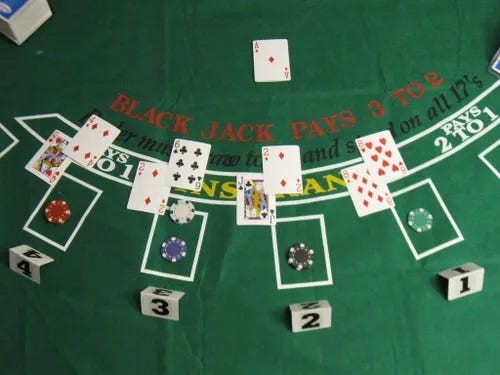
This is Wikipedia’s illustration of Blackjack. Do the numbers tell you anything?
About three years ago, a member of the controlled-opposition asked another author if the other author had over 19 Likes, just to be taken seriously. In Blackjack, as in all forms of gambling, the bank always wins. Still it cannot raise the bets over 17, while it’s always dressed nicely, especially for on-line players who might as well play the lottery that’s rigged in a similar fashion. The numbers game is a common mode of mass-manipulation.1
It looks like that 19 has become a magic number on my stack, forced on a number of entries. Strangely, the Rappoport one I published on the 19th was an unusual success, standing at 75 eight now.2
Of course, the last one on the extermination of the white race received a cautious 19, possibly, because in up to 20 countries “Like”ing it would have resulted in “adverse effects.” Still, “A fructibus cognoscitur arbor.” — You can recognize a tree from its fruits”
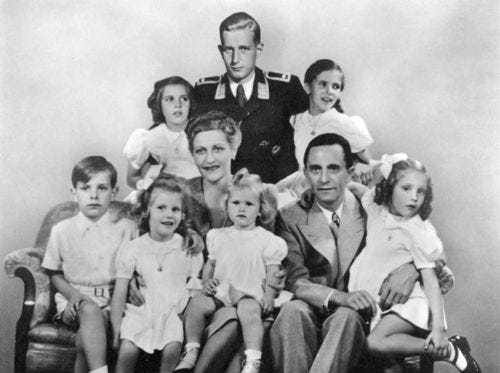
Of course, I am still looking forward to your insights regarding the (apparent) fact that the whole 20th century was already a testing ground for various forms of governments, while ensuring the elimination of the white race.
While I don’t believe in Numerology, you are most welcome to instruct me and your fellow readers!
Internet search is a gauge for popular queries, and it also rewrites the outcomes. Of course, AI has also been rewriting history since January, 20253 (maybe earlier), too…
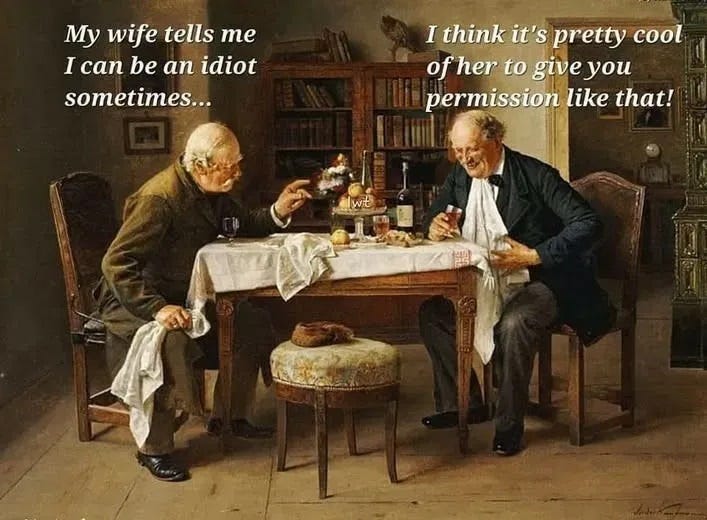
If you dislike these contents even after looking at the photo of the race to be eliminated, I can still tell you that I have permission from my wife to be an idiot sometimes!
Poker: The Cryptography Of Emotions:
Poker is a game of information and probability. Especially Texas Hold'em.
There is information everyone has - the face up cards. There is information you are forced to give - your bets. And there is information others give - their bets.
You can give false information, but that has a cost which is proportional to your probability to win, others' probabilities to win, and the discrepancy between the information you falsify and the truth.
You have odds based on the cards on the table. Odds based on the bet you have to make versus the pot. Odds based on how many people are still in the game. And the information comes out in pieces. While these odds change. So you can change what people think their odds are by lying about what you have through your bets by either over betting or under betting. But if other players call you on your lies with better held assets you end up paying, literally.
If you bluff and lose you expose your bluff because you pretended you had cards you didn't. And if you under bet to keep others staying in and collect a bigger pot, you risk them making an outlandish hand on turning over more face cards (flop, turn, or river).
So you can play straight and avoid lying or passing false information. But then people eventually understand you are playing straight and can predict your cards based on your pattern of consistent information.
You bet big on your big hands and people leave the pot. Bet small on your worthless hands and people take your blinds. And people figure you out.
So you have to pepper in lies, but only occasionally.
And that's all without trying to predict other peoples cards based on their peppered lies, feckless truths, or any of the million of combinations found in between.
Poker isn't a game of chance. It's a game of predicting probabilities and lying about them. It's a game of trying to understand patterns and people. It's a game of math and emotions.
It's cryptography of emotions.
Ray it is hard to push like on the dismal reality of the situation. But here we are.